The Journal of Public and International Affairs
Published since 1886 by the Academy of Political Science
Archive Search
Advanced Options
pp. 1-28
1996 Vote: The "No Majority" Realignment Continues
Everett Carll Ladd analyzes the 1996 presidential and congressional elections and finds continuities with other contests of the so called postindustrial era. Party ties are weak for a large and growing segment of the population so that neither the Republicans nor the Democrats have been able to become a long-term dominant majority. From this condition of unanchored voters emerges divided government and powerful splits along race, region, religion, and gender in ways without precedent.
The 1994 Congressional Elections: The Postindustrial Realignment Continues, Everett Carll Ladd
The 1992 Vote for President Clinton: Another Brittle Mandate?, Everett Carll Ladd
The 1988 Elections: Continuation of The Post-New Deal System, Everett Carll Ladd
Party Reform and the Public Interest, Everett Carll Ladd
more by this authorJoin the Academy of Political Science and automatically receive Political Science Quarterly.
APS Forum | Book Talk - The Insiders' Game: How Elites Make War and Peace
June 22, 2026
WEBINAR
CONTRIBUTIONS TO POLITICAL SCIENCE
Governing by Decree: The Trump Presidency and the Decline of “Legislating Together”
Desmond King
Publishing since 1886, PSQ is the most widely read and accessible scholarly journal with distinguished contributors such as: Lisa Anderson, Robert A. Dahl, Samuel P. Huntington, Robert Jervis, Joseph S. Nye, Jr., Theda Skocpol, Woodrow Wilson
view additional issuesArticles | Book reviews
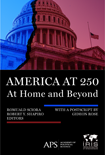 |
AMERICA AT 250:
AT HOME AND BEYOND |
The Academy of Political Science, promotes objective, scholarly analyses of political, social, and economic issues. Through its conferences and publications APS provides analysis and insight into both domestic and foreign policy issues.
With neither an ideological nor a partisan bias, PSQ looks at facts and analyzes data objectively to help readers understand what is really going on in national and world affairs.


