The Journal of Public and International Affairs
Published since 1886 by the Academy of Political Science
Archive Search
Advanced Options
pp. 688-689
Varieties of Power: Women’s Political Representation in Arab Parliaments, Marwa Shalaby
Scholarship on autocratic legislatures has moved beyond whether these bodies matter to the harder questions of what they do, for whom, and through what mechanisms. In Varieties of Power, Marwa Shalaby's major contribution is to show that a quota literature focused on women's numeric presence has often mistaken descriptive inclusion for political power. Her answer turns on what comparativists have largely overlooked: party institutionalization (PI), a feature of individual parties rather than of party systems. Much comparative work has treated party system institutionalization, a concept developed in democratic settings, as the key measure. Shalaby shows that even where party systems are weak or fragmented, individual parties may vary meaningfully in stability, platforms, constituency ties, and cohesion. Crucially, this variation, rather than quotas alone, shapes women's access to influential committees and to legislative voice.
The empirical foundation of the book is impressive. Shalaby draws on the Governance and Elections in the Middle East Project, which she founded, and analyzes nearly 22,000 parliamentary questions, more than 3,000 committee assignments, and 90 interviews. She includes three cases that are theoretically useful: Morocco combines gender quotas with relatively institutionalized parties, Jordan also has quotas but weaker p
To continue reading, see options above.
Join the Academy of Political Science and automatically receive Political Science Quarterly.
APS Forum | Book Talk - The Insiders' Game: How Elites Make War and Peace
June 22, 2026
WEBINAR
CONTRIBUTIONS TO POLITICAL SCIENCE
Governing by Decree: The Trump Presidency and the Decline of “Legislating Together”
Desmond King
Publishing since 1886, PSQ is the most widely read and accessible scholarly journal with distinguished contributors such as: Lisa Anderson, Robert A. Dahl, Samuel P. Huntington, Robert Jervis, Joseph S. Nye, Jr., Theda Skocpol, Woodrow Wilson
view additional issuesArticles | Book reviews
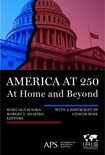 |
AMERICA AT 250:
AT HOME AND BEYOND |
The Academy of Political Science, promotes objective, scholarly analyses of political, social, and economic issues. Through its conferences and publications APS provides analysis and insight into both domestic and foreign policy issues.
With neither an ideological nor a partisan bias, PSQ looks at facts and analyzes data objectively to help readers understand what is really going on in national and world affairs.


