The Journal of Public and International Affairs
Published since 1886 by the Academy of Political Science
Archive Search
Advanced Options
pp. 689-690
The Banker Ladies: Vanguards of Solidarity Economics and Community-Based Banks, Caroline Shenaz Hossein
Historically, financial systems have excelled at making the rich richer. Bankers have tripped over themselves seeking to serve the wealthiest customers while neglecting the poorest citizens, who are often dismissed as creating more headaches than profits. Inequality in financial access thus piles onto the other inequalities that mark the modern economy—including inequalities of income, job security, healthcare, quality education, and political power.
As Caroline Shenaz Hossein documents powerfully in The Banker Ladies, many of the poorest citizens have not accepted this fate passively. Instead, they have met exclusion with their own home-grown and self-run financial mechanisms. The women described in The Banker Ladies organize what economists call ROSCAs, Rotating Saving and Credit Associations, a mainstay of informal economies around the world. The women of the Caribbean call them Boxhand, Pardner, and Susu, among other local names. In telling their stories, Hossein draws on eleven years of fieldwork across the Caribbean (Chapter 4), in Ethiopia and Ghana, and with members of the African and Caribbean diasporas in Toronto and Montreal (Chapters 5 and 6).
At the heart of a ROSCA is a group of people who come together to help one another obtain sums of money to use for business investment, paying bills, travel, and other needs
To continue reading, see options above.
Join the Academy of Political Science and automatically receive Political Science Quarterly.
APS Forum | Book Talk - The Insiders' Game: How Elites Make War and Peace
June 22, 2026
WEBINAR
CONTRIBUTIONS TO POLITICAL SCIENCE
Governing by Decree: The Trump Presidency and the Decline of “Legislating Together”
Desmond King
Publishing since 1886, PSQ is the most widely read and accessible scholarly journal with distinguished contributors such as: Lisa Anderson, Robert A. Dahl, Samuel P. Huntington, Robert Jervis, Joseph S. Nye, Jr., Theda Skocpol, Woodrow Wilson
view additional issuesArticles | Book reviews
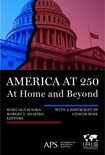 |
AMERICA AT 250:
AT HOME AND BEYOND |
The Academy of Political Science, promotes objective, scholarly analyses of political, social, and economic issues. Through its conferences and publications APS provides analysis and insight into both domestic and foreign policy issues.
With neither an ideological nor a partisan bias, PSQ looks at facts and analyzes data objectively to help readers understand what is really going on in national and world affairs.


