The Journal of Public and International Affairs
Published since 1886 by the Academy of Political Science
Archive Search
Advanced Options
pp. 687-704
Perceptions, Reality, and Tolerance for Voting Wait Times in American Elections and Their Consequences for Democracy
Costas Panagopoulos and Philip Moniz look at voter perceptions of wait time and willingness to wait. They find discrepancies between who expects and who is willing to wait through longer lines to cast their ballot.
Are Caucuses Bad for Democracy?, Costas Panagopoulos
The Keys to the White House: A Surefire Guide to Predicting the Next President, 2008 Edition, Allan Lichtman Reviewed by Costas Panagopoulos
The Election After Reform: Money, Politics, and the Bipartisan Campaign Reform Act, Michael Malbin Reviewed by Costas Panagopoulos
The Front-Loading Problem in Presidential Nominations, William G. Mayer and Andrew E. Busch Reviewed by Costas Panagopoulos
more by this authorJoin the Academy of Political Science and automatically receive Political Science Quarterly.
Academy Forum | The 2024 Presidential and Congressional Elections: Small Wave, Seismic Effects
WEBINAR
Jimmy Carter's Legacy
Jimmy Carter's Public Policy Ex-Presidency
John Whiteclay Chambers II
Publishing since 1886, PSQ is the most widely read and accessible scholarly journal with distinguished contributors such as: Lisa Anderson, Robert A. Dahl, Samuel P. Huntington, Robert Jervis, Joseph S. Nye, Jr., Theda Skocpol, Woodrow Wilson
view additional issuesArticles | Book reviews
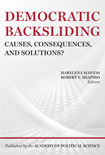 |
DEMOCRATIC BACKSLIDING:
CAUSES, CONSEQUENCES, AND SOLUTIONS? |
The Academy of Political Science, promotes objective, scholarly analyses of political, social, and economic issues. Through its conferences and publications APS provides analysis and insight into both domestic and foreign policy issues.
With neither an ideological nor a partisan bias, PSQ looks at facts and analyzes data objectively to help readers understand what is really going on in national and world affairs.


