The Journal of Public and International Affairs
Published since 1886 by the Academy of Political Science
Archive Search
Advanced Options
In the Current Issue
Volume 141 - Number 2 - Summer 2026
Opposing Congress: Alternative Ways to Benefit from Executive Privilege Protections
Mitchel A. Sollenberger AND Mark J. Rozell discuss how modern presidential administrations have expanded their power and the implications of this expansion on the relationship between the branches of government.
Who's That Knocking? A Study of the Strategic Choices Facing Large-Scale Grassroots Canvassing Efforts
GRANT L. FERGUSON, JAMES G. GIMPEL, Mark E. Owens, AND Daron R. Shaw analyze campaign outreach efforts to better understand how campaigns implement strategies to change voters’ rationale toward voting.
Military Service, A. Philip Randolph, and the Fight for Civil and Economic Freedom
SIDNEY MILKIS, KATHERINE RADER, AND Haley Stiles argue that the efforts led by A. Philp Randolph to desegregate the military and civil service during the 1940s and 1950s have been critical for securing more equal economic fortunes for African Americans.
Do Civil Society Organizations Promote Democracy? The Case of the Ultra-Orthodox in Israel
Asher Suzin examines the role of new ultra-Orthodox civil society organizations in Israel, focusing on their impact on democratization and liberalization.
When Language Trumps Democracy: National Identity and Democratic Resilience in Spain
Filip Milacic looks at the impact that unresolved conflicts over national identity and borders have on democratic resilience in Spain.
The Elite Politics of War and Peace: A Review Essay
Paul Fritz reviews The Insiders’ Game: How Elites Make War and Peace by Elizabeth N. Saunders and argues that it is one of the most important books on the domestic politics of war in recent years.
France, Economic Liberalism, and the Populist Challenge
Harvey B. Feigenbaum reviews Contested Liberalization by Jonah Levy and examines the books argument in the contest of the French “dirigiste” tradition, Macron’s policies, and the rise of populism in France.
The Weakness of Authoritarian Regimes: Rwanda as a Difficult But Convincing Case
Timothy Longman reviews Trajectories of Authoritarianism in Rwanda: Elusive Control before the Genocide by Marie-Eve Desrosiers and observes that the book demonstrates the fragility of authoritarian rule.
The Presidency of Bill Clinton after Thirty Years: A Review Article
Mark Zachary Taylor reviews A Fabulous Failure: The Clinton Presidency and the Transformation of American Capitalism by Nelson Lichtenstein and Judith Stein and reflects on how to square the economic achievements of the Clinton administration with the criticisms offered in the book.
Anarchy, Evolution, and Ethics in International Relations
James W. Davis reviews Right and Wronged in International Relations: Evolutionary Ethics, Moral Revolutions, and the Nature of Power by Brian C. Rathbun and discusses how engagement with the book’s arguments brings many of the defining debates in IR theory into sharper focus.
Democracy, Liberal Zionism, and Civil-Military Relations in Israel: A Review Article
IAN LUSTICK reviews Yoram Peri’s Generals in the Cabinet Room and Guy Ziv’s Netanyahu vs. the Generals, and he asserts that they both contribute to our understanding of Israeli politics, Israeli-Palestinian relations, and the consequences of democratization.
Is the U.S. Supreme Court Facing a Crisis of Democratic Legitimacy? A Review Article
Jonathan P. Kastellec reviews Kevin McMahon’s A Supreme Court Unlike Any Other and discusses the Court’s current place in American politics.
A Matter of Respect: A Review Essay about Respect and Loathing in American Democracy: Polarization, Moralization, and the Undermining of Equality
David Campbell reviews Respect and Loathing in American Democracy by Jeff Spinner-Halev and Elizabeth Theiss-Morse and reflects on what the book’s main argument—that the nation’s politics suffers from a lack of respect among political opponents—means for American politics and political scientists.
The House That Fox News Built? : Representation, Political Accountability, and the Rise of Partisan News, Martin Johnson , Kevin Arceneaux , Ryan J. Vander Wielen and Johanna Dunaway
Reviewed by Yphtach Lelkes
Battleground: Electoral College Strategies, Execution, and Impact in the Modern Era, Scott L. Althaus , Costas Panagopoulos and Daron R. Shaw
Reviewed by MARTHA KROPF
American Corruption Talk: A Political Etymology, Robert G. Boatright and Molly Brigid McGrath
Reviewed by Kerri Milita
Building the Worlds That Kill Us: Disease, Death, and Inequality in American History, David Rosner and Gerald Markowitz
Reviewed by Elena Conis
America's First Wartime Election: James Madison, DeWitt Clinton, and the War of 1812, Donald A. Zinman
Reviewed by Todd Estes
The Power of the Badge: Sheriffs and Inequality in the United States, Mirya R. Holman and Emily M. Farris
Reviewed by Asya Magazinnik
Resisting Reagan: Liberal Strategies in a Conservative Age, Joe J. Ryan-Hume
Reviewed by Calvin TerBeek
Corruption in America: A Fifty Ring Circus, Michael Johnston and Oguzhan Dincer
Reviewed by Jodi Vittori
Courts Unmasked: Civil Legal System Reform and COVID-19, Alyx Mark
Reviewed by Vanessa A. Baird
Living Right: Far-Right Youth Activists in Contemporary Europe, Agnieszka Pasieka
Reviewed by Patricia Anne Simpson
Constitutionalizing the Private Sphere: A Comparative Inquiry, Christina R. Bambrick
Reviewed by Mila Versteeg
Supply Chain Justice: The Logistics of British Border Control, Mary Bosworth
Reviewed by James Hampshire
The Welfare Workforce: Why Mental Health Care Varies Across Affluent Democracies, Isabel M. Perera
Reviewed by Colleen M. Grogan
Political Responsibility and Tech Governance: AI, Repro-tech and Structural Injustice, Jude Browne
Reviewed by Kristen R. Collins
Welfare Nationalism in Europe and Russia: The Politics of 21st Century Exclusionary and Inclusionary Migrations, Linda J. Cook
Reviewed by Yoshiko M. Herrera
Vigilante Islamists: Religious Parties and Anti-State Violence in Pakistan, Joshua White
Reviewed by C. CHRISTINE FAIR
Exit from International Organizations: Costly Negotiation for Institutional Change, Inken von Borzyskowski and Felicity Vabulas
Reviewed by Kathryn C. Lavelle
The Rise of the Russian Hawks: Ideology and Politics from the Late Soviet Union to Putin's Russia, Juliette Faure
Reviewed by Sergey Radchenko
Join the Academy of Political Science and automatically receive Political Science Quarterly.
APS Forum | Book Talk - The Insiders' Game: How Elites Make War and Peace
June 22, 2026
WEBINAR
CONTRIBUTIONS TO POLITICAL SCIENCE
Governing by Decree: The Trump Presidency and the Decline of “Legislating Together”
Desmond King
Publishing since 1886, PSQ is the most widely read and accessible scholarly journal with distinguished contributors such as: Lisa Anderson, Robert A. Dahl, Samuel P. Huntington, Robert Jervis, Joseph S. Nye, Jr., Theda Skocpol, Woodrow Wilson
view additional issuesArticles | Book reviews
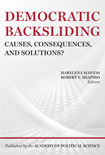 |
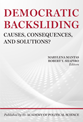
DEMOCRATIC BACKSLIDING:
CAUSES, CONSEQUENCES, AND SOLUTIONS? |
The Academy of Political Science, promotes objective, scholarly analyses of political, social, and economic issues. Through its conferences and publications APS provides analysis and insight into both domestic and foreign policy issues.
With neither an ideological nor a partisan bias, PSQ looks at facts and analyzes data objectively to help readers understand what is really going on in national and world affairs.