The Journal of Public and International Affairs
Published since 1886 by the Academy of Political Science
Archive Search
Advanced Options
pp. 436-437
America's First Wartime Election: James Madison, DeWitt Clinton, and the War of 1812, Donald A. Zinman
This book brings attention to an undeservedly little-known yet fascinating U.S. presidential election. Donald A. Zinman's examination of the wartime 1812 contest concludes that James Madison's reelection validated the war's general popularity and that it saw the start of absentee voting (by soldiers) in presidential contests. As the incumbent, Madison had the edge in electoral math. The 1810 census showed population increases in Democratic-Republican leaning states, spiking Madison's electoral vote total. As Zinman demonstrates clearly, the electoral calendar “was a decentralized mess” (199), with the nomination phase overlapping the election phase and states voting on different dates with widely diverging rules. Zinman also sees signs of the emerging model of organized party competition that came a few decades later. Lastly, given the unsuccessful efforts of challenger DeWitt Clinton to form a fusion coalition with Federalists, “One of the lessons . . . is that for an effective fusion campaign to occur, there must be a system in place of institutionally strong political parties” (200).
Zinman's book has several notable strengths. It provides a detailed case study of the “heir apparent presidency,” the subject of his first book, which is particularly apt here since Madison, as Jefferson's heir apparent
To continue reading, see options above.
Join the Academy of Political Science and automatically receive Political Science Quarterly.
APS Forum | Book Talk - The Insiders' Game: How Elites Make War and Peace
June 22, 2026
WEBINAR
CONTRIBUTIONS TO POLITICAL SCIENCE
Governing by Decree: The Trump Presidency and the Decline of “Legislating Together”
Desmond King
Publishing since 1886, PSQ is the most widely read and accessible scholarly journal with distinguished contributors such as: Lisa Anderson, Robert A. Dahl, Samuel P. Huntington, Robert Jervis, Joseph S. Nye, Jr., Theda Skocpol, Woodrow Wilson
view additional issuesArticles | Book reviews
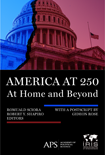 |
AMERICA AT 250:
AT HOME AND BEYOND |
The Academy of Political Science, promotes objective, scholarly analyses of political, social, and economic issues. Through its conferences and publications APS provides analysis and insight into both domestic and foreign policy issues.
With neither an ideological nor a partisan bias, PSQ looks at facts and analyzes data objectively to help readers understand what is really going on in national and world affairs.


