The Journal of Public and International Affairs
Published since 1886 by the Academy of Political Science
Archive Search
Advanced Options
pp. 707-710
Under the Gun: Political Parties and Violence in Pakistan, Niloufer A. Siddiqui
In Under the Gun, Siddiqui compellingly explains why and how political parties deploy violence by focusing on aspects of the parties in question rather than looking at individual or cross-national macrolevel analyses. She also challenges extant scholarship that contends that parties’ use of violence is primarily an artifact of weak state capacity. Instead, she argues that political and economic circumstances give rise to the incentives that parties face to maintain violence specialists either within the party or to develop ties with external specialists. The choice to employ violence is driven by a fairly straightforward assessment of costs and benefits of doing so for the party.
She limits her study to the main parties of Pakistan, all of which operate in areas of contested hegemony and partial state control. She argues that in areas where parties have a captive support base—where support for the party is relatively inelastic—voters are less likely to punish parties for using violence. This kind of environment exists where there are specific kinds of cleavages, notably ethnic cleavages in the cases she assesses. It is inadequate to find violence potentially advantageous: parties must also possess the ability to perpetrate violence. Siddiqui argues that a party's organizational structure determines whether it is capable of carryin
To continue reading, see options above.
Pakistan’s Pathway to the Bomb: Ambitions, Politics, and Rivalries, Mansoor Ahmed Reviewed by C. CHRISTINE FAIR
Explaining Why Some Muslims Support Islamist Political Violence, C. CHRISTINE FAIR and Parina Patel
Join the Academy of Political Science and automatically receive Political Science Quarterly.
Academy Forum | The Transatlantic Relationship and the Russia-Ukraine War
January 9, 2025
4:00 p.m.–5:00 p.m. ET
WEBINAR
Virtual Issue
Introduction: Black Power and the Civil Rights Agendas of Charles V. Hamilton
Marylena Mantas and Robert Y. Shapiro
Publishing since 1886, PSQ is the most widely read and accessible scholarly journal with distinguished contributors such as: Lisa Anderson, Robert A. Dahl, Samuel P. Huntington, Robert Jervis, Joseph S. Nye, Jr., Theda Skocpol, Woodrow Wilson
view additional issuesArticles | Book reviews
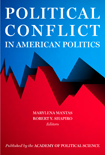 |
POLITICAL CONFLICT IN AMERICAN POLITICS |
The Academy of Political Science, promotes objective, scholarly analyses of political, social, and economic issues. Through its conferences and publications APS provides analysis and insight into both domestic and foreign policy issues.
With neither an ideological nor a partisan bias, PSQ looks at facts and analyzes data objectively to help readers understand what is really going on in national and world affairs.


