The Journal of Public and International Affairs
Published since 1886 by the Academy of Political Science
Archive Search
Advanced Options
pp. 189-190
Democracy Delayed: The Case of Castro's Cuba, Juan J. Lopez
Why Dominant Parties Lose: Mexico's Democratization in Comparative Perspective, Kenneth F. Greene Reviewed by Jorge I. Domínguez
Transnational Conflicts: Central America, Social Change, and Globalization, William I. Robinson Reviewed by Jorge I. Domínguez
Blood and Debt: War and the Nation-State in Latin America, Miguel Angel Centeno Reviewed by Jorge I. Domínguez
Cuba's Foreign Relations in a Post-Soviet World, H. Michael Erisman Reviewed by Jorge I. Domínguez
more by this authorJoin the Academy of Political Science and automatically receive Political Science Quarterly.
America at a Crossroads: The 2024 Presidential Election and Its Global Impact
April 24, 2024
8:30 a.m. – 12:00 p.m. ET
New York, NY
Virtual Issue
Introduction: Black Power and the Civil Rights Agendas of Charles V. Hamilton
Marylena Mantas and Robert Y. Shapiro
Publishing since 1886, PSQ is the most widely read and accessible scholarly journal with distinguished contributors such as: Lisa Anderson, Robert A. Dahl, Samuel P. Huntington, Robert Jervis, Joseph S. Nye, Jr., Theda Skocpol, Woodrow Wilson
view additional issuesArticles | Book reviews
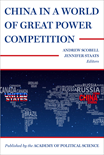 |
CHINA IN A WORLD OF GREAT POWER COMPETITION |
The Academy of Political Science, promotes objective, scholarly analyses of political, social, and economic issues. Through its conferences and publications APS provides analysis and insight into both domestic and foreign policy issues.
With neither an ideological nor a partisan bias, PSQ looks at facts and analyzes data objectively to help readers understand what is really going on in national and world affairs.


